
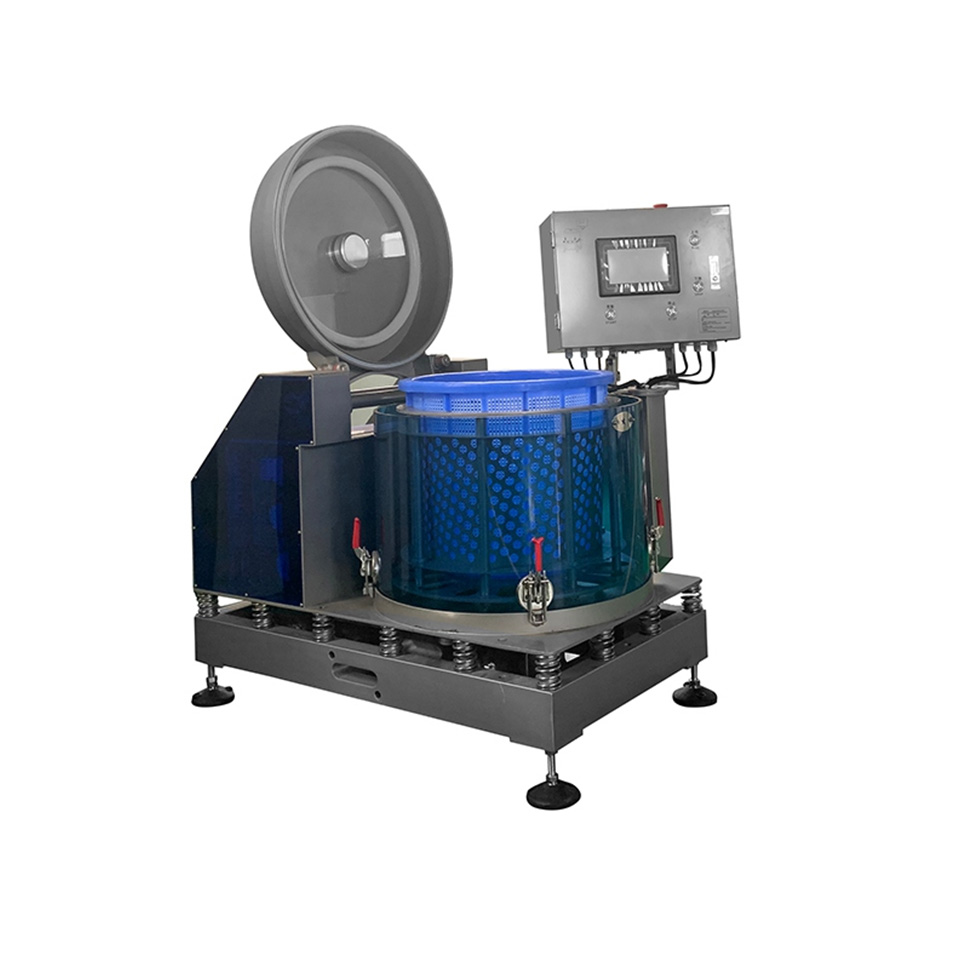
Commercial Vegetable Centrifuge Machine for Washed Vegetables in a Processing Line

News Blog

Commercial Vegetable Centrifuge Machine for Washed Vegetables in a Processing Line

See where a commercial vegetable centrifuge machine fits after washing, what washed vegetables suit dewatering, and what buyers should check.

A commercial vegetable centrifuge machine is normally placed after vegetable washing and before weighing, packing, seasoning, chilling, or further processing. Its job is to reduce excess surface water on washed vegetables so the next station receives a more predictable product flow.

Key Takeaways for Processing-Line Planning

  • Place dewatering after washing or rinsing, not before the cleaning step.
  • Match centrifuge capacity with washer output, unloading time, and packing speed.
  • Use the machine for surface water control, not sanitation, cutting, or preservation drying.
  • Check basket volume, loading method, voltage, drainage, cleaning access, and floor space before purchase.

Why the Dewatering Station Belongs After Washing and Before Downstream Handling

A commercial vegetable centrifuge machine normally makes the most sense after produce has already been washed and before the next value-adding step begins. Washing loosens soil, field residues, and process debris, but it also leaves water on leaves, cut surfaces, stems, and irregular shapes. If that water travels into later operations, it can dilute dressings, affect weighing accuracy, increase dripping around conveyors, or create inconsistent handling before packaging. This is why dewatering should be understood as a front-end preparation station in food processing machinery, not as a substitute for the wash stage itself. In a processing line, the practical sequence is usually easier to understand as material condition rather than equipment order. The produce enters the dewatering station only after it has been cleaned or rinsed to the required process standard. At that point, the remaining problem is not soil removal but free water removal. Centrifugal action can help separate liquid from the surface of suitable produce forms, allowing the next station to receive material that is less wet and easier to manage. This can support smoother batching, manual transfer, belt movement, container loading, or packaging preparation, depending on the factory layout. The boundary matters because buyers sometimes describe a vegetable centrifuge machine as if it completes the whole preparation task. That creates unrealistic expectations. It does not wash raw produce, cut vegetables into a target size, inspect contaminants, control microbial hazards by itself, or design the surrounding line. FDA HACCP guidance is useful here as a management reminder: each processing step should be considered within the facility’s hazard analysis and control plan, rather than treated as an isolated solution. In other words, dewatering is a station with a clear role, but the food business still needs validated washing, hygienic handling, trained operation, and appropriate process controls around it.

Washed Vegetables That Make Sense for a Fruit and Vegetable Dewatering Machine

The most conservative way to judge material fit is to start with the physical form of the washed produce. A fruit and vegetable dewatering machine is easier to place when the material carries surface water, can tolerate batch movement, and is intended for a later production step where excess water is unwanted. This does not mean every fruit, every vegetable, or every food material is suitable. It means the use case is strongest when the product form and process goal match the dewatering function.

Leafy vegetables after washing: Washed leafy greens are a reasonable example because their layered surfaces and folds can retain water after rinsing. A vegetable centrifuge machine may help remove excess water before portioning, mixing, or packing, but delicate leaves still require suitable handling expectations and process validation.

Cut vegetables with visible surface moisture: Cut or sectioned vegetables may carry water on flat surfaces, edges, and cavities after washing. Dewatering can be useful before later handling, but the actual result can vary by cut size, firmness, load quantity, and how the material is arranged in the basket.

Herbs and small leafy materials: Washed herbs can hold moisture around stems and leaf clusters, making them a practical example for a conservative application discussion. Because herbs can be delicate, buyers should treat dewatering as a controlled handling step rather than assume the same outcome as sturdier vegetable pieces.

Mixed produce batches only when forms are compatible: Some operations may want to process more than one vegetable type, but mixing very different shapes, weights, and fragility levels can affect handling consistency. A conservative approach is to group materials with similar surface-water behavior and mechanical tolerance.

This material-based view also prevents the article from drifting into a specification-only discussion. Capacity, basket volume, voltage, and footprint all matter, but they do not decide material suitability by themselves. For example, a larger basket does not automatically mean all washed vegetables can be processed together, and a commercial or industrial label does not guarantee the same drying result across leaves, cubes, herbs, and heavier produce. The better scenario question is: after washing, does the material still carry removable surface water, and will reducing that water help the next station operate more consistently?

Where the TY-70L Example Fits in a Commercial or Industrial Front-End Layout

Huayi Equipment’s TY-70L manual top-loading fruit and vegetable dewatering model is a useful example of how a commercial vegetable centrifuge machine can be described for line-position understanding. Public product information identifies the model as TY-70L, with a 70L inner basket, 600–900kg/h stated processing capacity, 380V power, 1.7kW total power, 500kg machine weight, and a 1030 × 1250 × 800 mm footprint. These details support a front-end food production setting more than a small kitchen tool setting, especially where washed raw materials need excess water removed before the next production step. The most relevant scenario value is not that the machine replaces other food processing machinery, but that it occupies a compact dewatering station between washing and later handling. The 70L basket suggests batch-style loading, while the manual top-loading design means operators should understand it as manually fed equipment rather than a fully automatic dewatering line. The published 600–900kg/h capacity can help a project team discuss approximate line matching, but it should not be treated as a guaranteed output for every vegetable type, load condition, or upstream washing method. Different materials can carry different amounts of water and respond differently to centrifugal handling. For an industrial vegetable centrifuge machine, the word “industrial” should be read in relation to use environment, batch volume, and integration into a production setting. It should not be stretched into claims about continuous running hours, confirmed hygiene certification, specific material grades, or universal process results unless those points are separately documented. ISO 22000 provides a helpful management background because food businesses need to place equipment decisions inside a broader food safety management system. That is different from claiming that a single vegetable centrifuge has a particular certification or validated outcome. In practical layout discussions, the TY-70L is best considered when a processing team already has a washing stage and needs a defined station for removing excess water from suitable washed vegetables. Its compact machine body can be relevant where floor space matters, and its published weight and dimensions help engineering staff think about placement. However, the surrounding requirements—such as upstream washing, baskets or containers, transfer method, drainage planning, operator access, cleaning practice, and downstream packaging or cooking flow—still belong to the facility’s own process design. The equipment contributes to the dewatering step; it does not define the entire food production line. This is also where the difference between commercial and industrial wording becomes practical. A commercial vegetable centrifuge machine may be searched by central kitchens, food service preparation projects, and small-to-medium processors that need reliable front-end dewatering. An industrial vegetable centrifuge machine may be searched by buyers thinking about factory layouts, larger batches, and production-line compatibility. In both cases, the useful decision is the same: place the unit where washed produce needs excess water removed before the next operation, and keep material suitability, handling limits, and process controls in view.

Conclusion

A vegetable centrifuge machine is most valuable when it is treated as a specific dewatering station for washed produce, not as a complete processing system. For leafy vegetables, cut vegetables, herbs, and similar washed materials, it can help reduce excess surface water before downstream handling when the material form is suitable. The Huayi Equipment TY-70L example shows how public details such as 70L basket capacity, 600–900kg/h stated capacity, manual top-loading operation, and compact dimensions can support early layout understanding. The next sensible step is to review the TY-70L’s published specifications and application wording in the context of the intended washed-material workflow.

Principles and practices of small - and medium - scale fruit juice processing

HACCP Principles & Application Guidelines

ISO 22000:2018 - Food safety management systems — Requirements for any organization in the food chain

TY70L Manual Centrifuge Top-Loading Fruit and Vegetable Dewatering 600–900kg/h

Line Position Checklist

Line pointWhat to checkWhy it matters
Before centrifugeWasher discharge, product cut size, free water levelThese conditions decide how much water the dewatering station must handle.
Centrifuge stationBasket volume, loading weight, cycle time, drainageThese details affect real hourly throughput.
After centrifugeWeighing, mixing, seasoning, packing, chillingLower surface water improves downstream consistency.
Factory layout380 V supply, floor area, operator clearance, drain routeInstallation must fit the existing processing line.

Buyer Checklist

  • Confirm the main washed vegetables: leafy greens, cut vegetables, herbs, or mixed produce.
  • Ask whether the washer discharges continuously or in batches.
  • Compare kg/h capacity with the complete front-end line, not the centrifuge alone.
  • Confirm whether manual top-loading is suitable for operators and product flow.
  • Check cleaning access, drainage route, electrical supply, and available floor space.

FAQ

Where should a commercial vegetable centrifuge machine sit in a food processing line?

It usually sits after washing or rinsing and before weighing, packing, mixing, seasoning, chilling, or further processing.

Which washed vegetables are reasonable examples for dewatering?

Leafy greens, cut vegetables, herbs, and similar washed produce can be reasonable candidates when excess surface water affects the next operation.

Does the machine replace washing or cutting equipment?

No. It only supports the water-removal step after washing. Washing, cutting, sanitation, and packing remain separate processes.

What capacity details should buyers compare?

Basket volume, stated kg/h, loading amount, cycle time, unloading time, and washer output should be checked together.

Why does surface water matter after washing?

Excess water can affect packing weight, seasoning strength, container water accumulation, and downstream handling consistency.

Published for Huayi Smart Solutions. Last updated: 2026-08-02.